

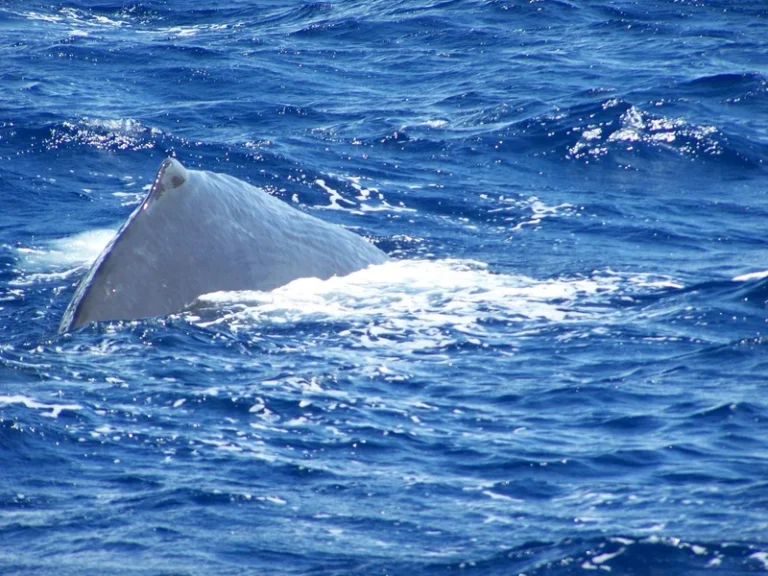

The persistent mystery of whether could a whale really swallow a human has captivated maritime folklore, theological debates, and literature for centuries, inspiring stories from the biblical book of Jonah to nineteenth-century whalers tales. However, when marine biologists examine the anatomical architecture and biochemical conditions inside these oceanic titans, it becomes abundantly clear that for almost every whale species on Earth, swallowing a person is a physical impossibility. Only the toothed sperm whale possesses an esophagus wide enough, yet entering its digestive tract guarantees swift fatality from acute anoxia, crushing peristaltic muscular force, and concentrated gastric acid.
The Great Anatomical Paradox: Huge Mouths but Tiny Throats in Baleen Whales
The blue whale (Balaenoptera musculus) stands as the largest creature known to have ever inhabited planet Earth, weighing upwards of 150 metric tons and stretching up to thirty meters in length. When executing its spectacular lunge feeding maneuver, the ventral throat pleats expand dramatically, ballooning the oral cavity into a cavernous pocket capable of engulfing an entire swimming pool worth of seawater. Dozens of adult humans could physically stand inside this cavernous space before the massive jaws close shut. Yet, despite this titanic scale, popular intuition regarding their swallowing capability is profoundly mistaken.
The evolutionary trajectory of baleen whales (Mysticeti) was fine-tuned specifically for bulk filter feeding on minuscule zooplankton and schooling fish. Rather than teeth, their upper jaws brandish hundreds of keratinous baleen plates acting as a precision sieve. After expelling tons of water using the massive piston-like movement of the muscular tongue, the trapped biomass is directed backward toward the pharynx. Here lies the insurmountable bottleneck: the esophagus of a fully grown blue whale or humpback measures merely ten to twenty centimeters in diameter, scarcely wider than an ordinary grapefruit.
Dense cartilaginous rings enclosing the laryngeal sphincter ensure that ocean water cannot infiltrate the respiratory system during deep diving maneuvers. This rigid anatomical construction renders the esophagus completely inelastic when confronted with anything larger than small forage fish. Should a human diver or bulky debris be accidentally scooped into a baleen whale mouth, mechanoreceptors covering the palate immediately detect the foreign object. The whale cannot swallow a human even if it wished to, as any such obstruction would risk fatal choking, prompting the mammal to immediately blow the intruder out.
The Sperm Whale: A Deep-Diving Predator with a Deadly Four-Chambered Stomach
Among all living cetaceans, only the sperm whale (Physeter macrocephalus) possess the throat dimensions capable of swallowing an adult human whole. Reaching lengths of twenty meters and masses exceeding fifty tons, these deep-sea hunters do not filter plankton; they actively pursue elusive giant and colossal squids in the sunless bathypelagic abyss at depths exceeding two thousand meters. To swallow cephalopods weighing hundreds of kilograms, nature equipped the sperm whale with a generously proportioned distensible pharynx and an elastic muscular esophagus.
However, any hypothetical descent into a sperm whale internal tract represents a guaranteed death sentence within minutes. The sperm whale digestive system is a sophisticated multi-chambered complex closely resembling that of terrestrial ruminants. The first chamber, known as the fore-stomach or proventriculus, lacks enzymatic secretions but features exceptionally thick, muscular walls. This chamber functions as a biological milling machine, contracting violently to pulverize tough squid flesh and abrasive chitinous beaks. The crushing mechanical pressures exerted inside would shatter mammalian bones within moments.
Once through the muscular grinding chamber, the ingested matter enters the glandular stomach chambers where lethal chemical hydrolysis occurs. Cells lining these chambers secrete industrial volumes of concentrated hydrochloric acid alongside proteolytic enzymes like pepsin. The internal environment drops to an intensely acidic pH of 1.5 to 2.0. This caustic bath causes rapid denaturation of biological proteins, inflicting severe chemical necrosis upon human mucous membranes, eyes, and dermis within dozens of seconds.
Compounding the mechanical trauma and chemical destruction is the total absence of breathable oxygen. The interior of a cetacean stomach is a suffocating atmosphere saturated with metabolic carbon dioxide, methane, and nitrogen generated by digesting organic matter. Even if an individual were equipped with a crush-proof diving suit, the complete anoxia would induce loss of consciousness in under ninety seconds. Without a continuous supply of gas, death from rapid asphyxiation is biologically inevitable.
In baleen whales such as the blue whale and humpback, the esophagus measures a mere 10 to 20 centimeters across. Heavy cartilaginous structures around the larynx physically prevent large items from entering the digestive tract.
The multi-chambered stomach system of a sperm whale contains zero breathable oxygen. A swallowed individual would succumb to irreversible hypoxia and methane gas within 90 to 120 seconds of sphincter closure.
The thick muscular walls of a whale fore-stomach exert immense mechanical grinding pressure, designed to pulverize the tough mantles and chitinous beaks of giant squid, instantly shattering mammalian bones.
Gastric acid secretion alongside pepsin drops the internal pH down to 1.5, sparking immediate chemical burns, protein coagulation, and rapid enzymatic degradation of soft biological tissues.
The Myth of James Bartley: Debunking the Modern Victorian Jonah Legend
For well over a century, popular books, pulpit sermons, and sensationalist pamphlets recounted the extraordinary ordeal of an English sailor named James Bartley. The story alleged that in February 1891, off the coast of the Falkland Islands, the whaling vessel Star of the East harpooned an aggressive sperm whale. During the violent encounter, the leviathan allegedly smashed one of the smaller whaleboats, sending two sailors overboard into the icy swells, one of whom was presumed drowned: young James Bartley.
According to the widely published legend, the whale carcass was processed the following afternoon, and when whalers hoisted the enormous stomach aboard and sliced open its walls, they discovered Bartley alive inside, unconscious but still breathing after nearly forty hours. Colorful embellishments claimed that the sailor skin had been permanently bleached chalk-white by gastric acids, and that he spent weeks recovering his mental faculties before living a normal life. This sensational tale was frequently cited as definitive proof that the biblical account of Jonah was scientifically feasible.
Rigorous historical investigation by science historian Edward Davis in the late twentieth century dismantled this myth entirely. Davis unearthed the original logbooks and shipping records of the Star of the East from British maritime archives. The records revealed that the vessel was not even a whaler, but a standard merchant cargo barque. Crucially, the ship manifest contained no record of anyone named James Bartley ever serving aboard. The captain widow, who accompanied her husband on that specific voyage, later confirmed that the entire narrative was a complete hoax concocted by bored deckhands and eagerly propagated by tabloid newspapers.
In essence, the myth survived because it fulfilled an enduring cultural archetype of survival against insurmountable odds within an alien oceanic abyss. Modern cetologists and forensic medical examiners uniformly agree that no human could survive twenty minutes, let alone forty hours, inside the proventriculus or main stomach chamber of any cetacean species. The lack of air, pressure, and acidic decomposition make the Bartley account purely folkloric.
«Anatomically, a humpback whale simply cannot swallow a human being. The diameter of their esophagus is roughly the size of a grapefruit or a small cantaloupe melon. Even if a diver were swept into its massive oral cavity during feeding, the whale would immediately spit them out through a powerful gag reflex.»
Dr. Vanessa Pirotta, Wildlife Scientist and Marine Biologist at Macquarie University
Modern Close Encounters: Michael Packard and Rainer Schimpf Trapped in Whale Jaws
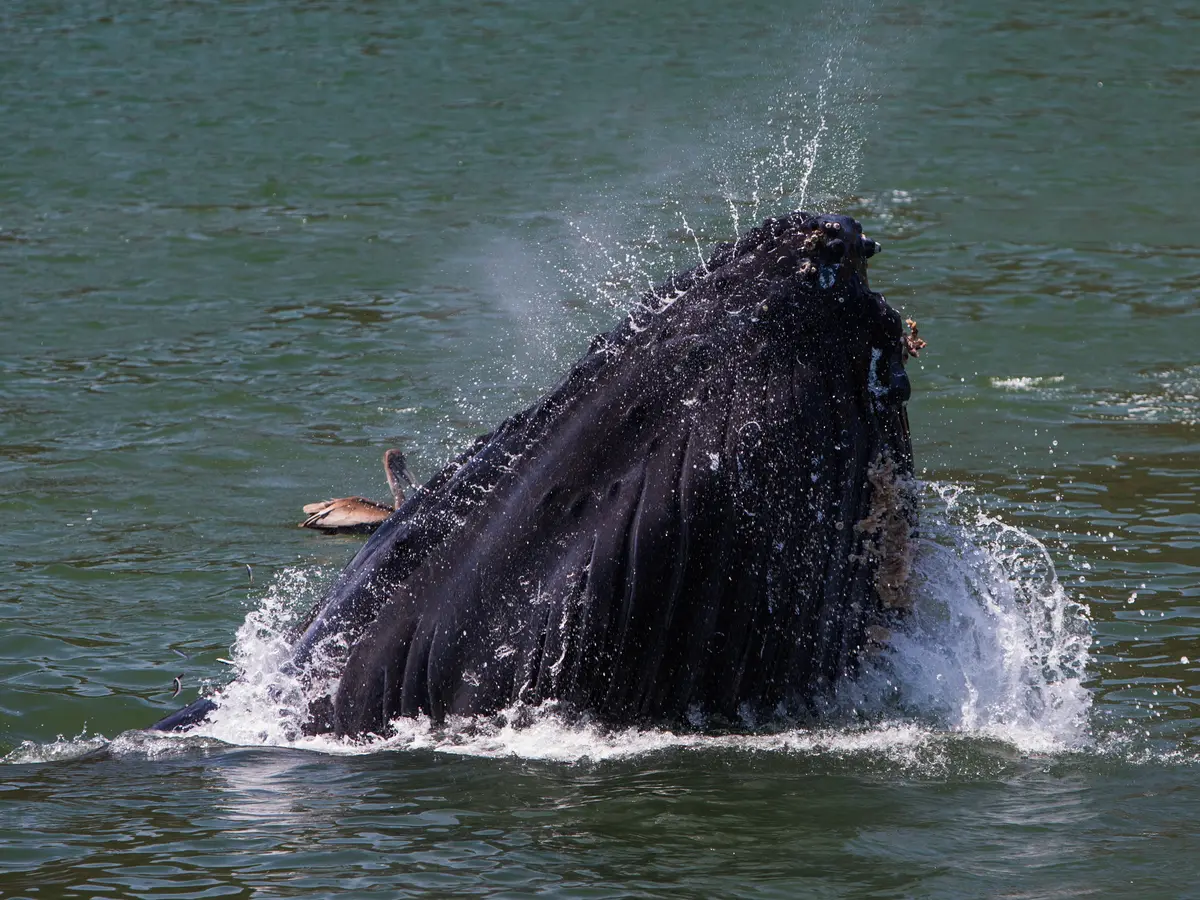
While being swallowed into a digestive tract is medically impossible, brief accidental engulfment in a whale mouth is a documented reality. The most renowned modern incident took place in June 2021 off the coast of Provincetown, Massachusetts. Professional lobster commercial diver Michael Packard was descending forty-five feet beneath the Atlantic surface when he felt a tremendous jolt, followed by pitch-black darkness. Enclosed by massive flexing muscular walls, Packard realized with chilling certainty that he was trapped inside the jaws of a humpback whale.
Packard spent approximately thirty to forty seconds trapped within the cetacean mouth. Because he was breathing compressed air through his regulator, he maintained consciousness while fearing the beast would crush his ribcage or try to swallow him. Fortunately, the humpback recognized that its mouthful of water and schooling fish contained an unpalatable foreign anomaly. The whale breached the ocean surface, vigorously shook its head, and ejected Packard onto the open water. The diver survived with only soft tissue bruising and a dislocated knee caused by thrashing against the baleen plates.
A remarkably similar event unfolded in 2019 off Port Elizabeth, South Africa, involving wildlife tour operator Rainer Schimpf. While filming an offshore sardine run, a fifteen-ton Bryde whale lunged from the deep, accidentally trapping Schimpf head-first inside its oral cavity. Schimpf felt intense pressure around his torso before the whale opened its jaws underwater, allowing the photographer to swim free completely unscathed. These miraculous survivals demonstrate that whales possess keen intra-oral awareness and reflexively reject humans rather than ingesting them.
- Baleen whales (Mysticeti) possess oral cavities holding up to 60,000 liters of water, yet their esophagus is rigidly restricted to the diameter of a small football.
- Sperm whales (Physeter macrocephalus) are the sole cetaceans anatomically capable of passing an adult human body through their expansive muscular pharynx.
- The four-chambered stomach of a sperm whale operates as an abrasive mechanical grinder and caustic acid bath, rendering living survival physiologically impossible.
- Documented modern encounters where divers were briefly trapped in a whale mouth invariably ended in immediate regurgitation without entering the throat.
Insights from Marine Biologists: Sensory Awareness and Ocean Conservation
Modern marine science has revealed extraordinary sensory capabilities in cetaceans. Leading ocean researchers emphasize that whales are highly discerning feeders with specialized tactile nerve centers lining their mouths. Dr. Vanessa Pirotta from Macquarie University notes that the base of baleen plates contains dense concentrations of mechanoreceptors that register the exact texture and rigidity of incoming prey. The presence of a rigid scuba tank, neoprene wet suit, or flippers triggers an instant anti-foreign expulsion response.
Renowned cetacean researcher Dr. Shane Gero highlights that sperm whales possess sophisticated biosonar systems powered by their massive spermaceti organ. This acoustic imaging capability allows them to scan underwater targets with exquisite resolution, discerning bone density and internal organs from considerable distances. A sperm whale can readily differentiate a scuba diver from its typical cephalopod quarry, meaning that deliberate predatory attacks on humans do not occur in nature.
Appreciating the true physiology of these animals shifts the focus toward genuine ecological priorities. Rather than fearing mythical scenarios of being swallowed alive, humanity must recognize symbiotic ecological relationships in natural ecosystems and address the real hazards facing cetaceans today. Commercial shipping collisions, acoustic pollution from military sonars, and massive ingestions of non-biodegradable marine plastic debris constitute the true, devastating threats confronting whales in our modern oceans. Also read our related investigative feature on symbiotic ecological relationships in natural ecosystems.