

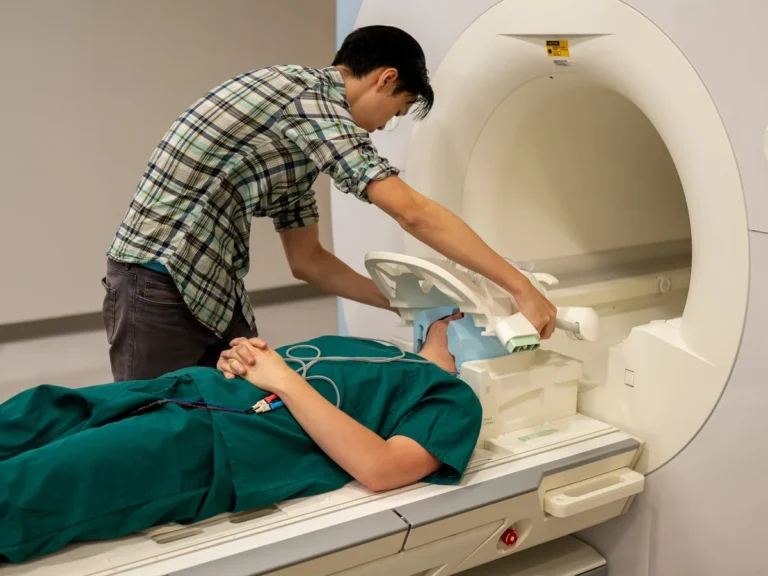

For millennia, the concept of piercing the private sanctuary of another human being’s consciousness belonged strictly to the realms of stage mentalism, occult mysticism, and science fiction. Yet rapid advancements in non-invasive functional neuroimaging and transformer-based artificial intelligence have prompted an urgent cultural question: are we truly on the cusp of genuine mind reading semantic decoder technology? Recent landmark studies demonstrate that AI models can reconstruct the general semantic narrative of a person’s thoughts from functional MRI brain scans. However, between deciphering cortical blood oxygenation voxels and truly reading a human mind lies an enormous scientific chasm that current technology cannot breach.
The Breakthrough: How fMRI and AI Transformers Decipher Neural Language
At the epicenter of modern scientific discourse regarding neural decoding lies the pioneering research conducted by Jerry Tang and Alexander Huth at the University of Texas at Austin, published in the journal Nature Neuroscience. The researchers designed a non-invasive semantic decoder that translates complex patterns of cortical blood oxygenation into coherent, continuous natural language text.
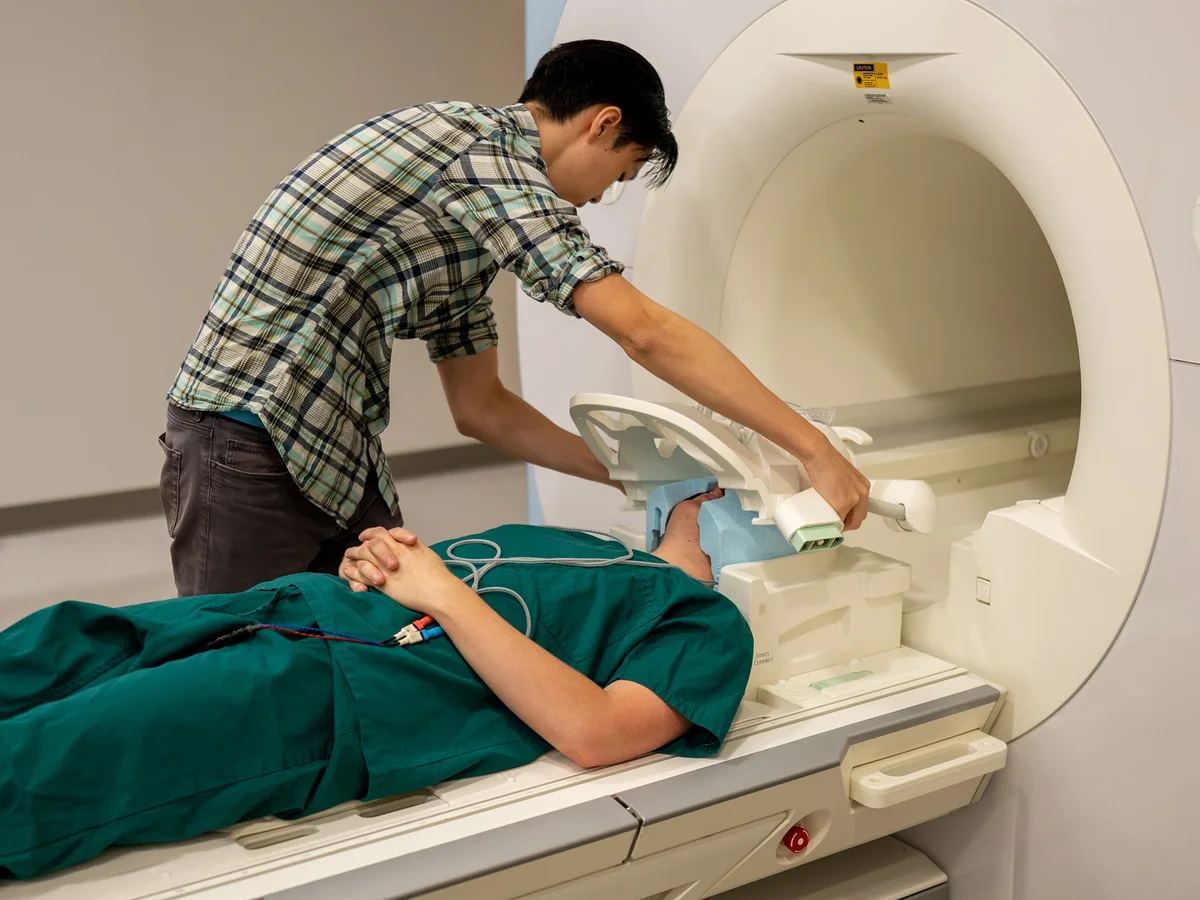
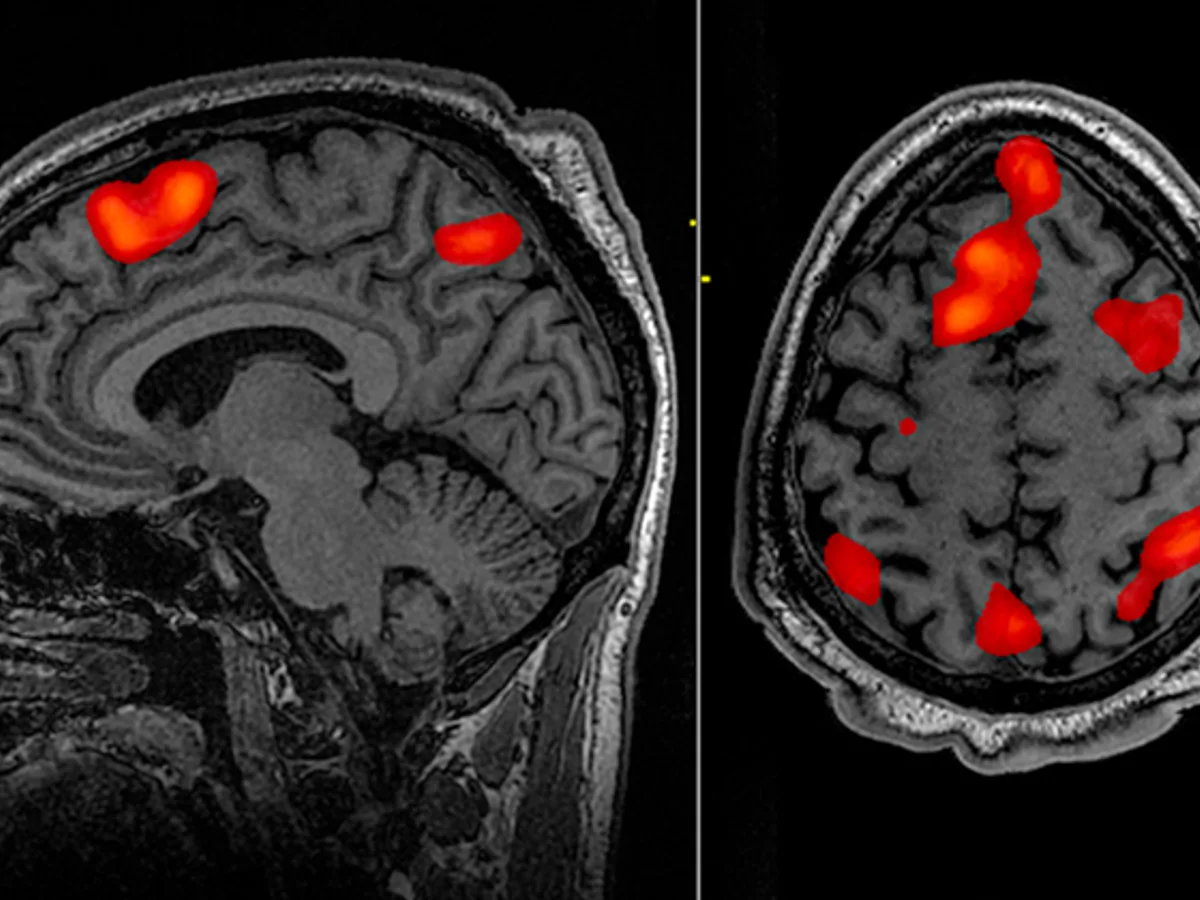
Whenever a person listens to spoken speech, watches a silent video, or silently imagines telling a story, specific neuronal populations burn energy and demand oxygen. Functional magnetic resonance imaging (fMRI) detects this localized Blood Oxygen Level Dependent (BOLD) response across tens of thousands of cubic millimeter units known as voxels. Tang and Huth paired these high-dimensional voxel maps with a generative language model (similar in architecture to GPT). The model hypothesizes candidate word sequences and uses an encoding model to predict how the participant’s brain should respond, selecting the phrase with the highest probabilistic match.
The empirical results were astonishing: while a participant listened to podcast stories, the semantic decoder produced continuous text streams capturing the exact narrative meaning. When an audio story stated, ‘I don’t have my driver’s license yet,’ the decoder outputted: ‘She isn’t even ready to learn to drive yet.’ The AI did not extract exact phonemes or grammar; it captured the underlying conceptual gist—the semantic essence of the cognitive stream.
Reading Brain Waves Is Not Reading Minds: The Fundamental Neurological Divide
Despite sensationalist headlines proclaiming the arrival of telepathic computers, cognitive neuroscientists emphasize a vital scientific distinction: decoding neural hemodynamic signals is fundamentally different from reading a human mind. The human mind is not an internal teleprompter running typed strings of text.
Human thought is inherently multimodal, chaotic, non-linear, and visceral. In any given fraction of a second, consciousness encompasses an intricate mosaic of sensory inputs (ambient temperature, the taste of coffee, peripheral shadows), fleeting emotional states (background anxiety, nostalgic memories), and abstract semantic associations. There is no neat, universal ‘lookup table’ in the cerebral cortex where concept X maps to neuron Y. Semantic representations are broadly distributed across diffuse temporal and prefrontal networks, dynamically shaped by an individual’s unique lifetime of subjective experiences.
Furthermore, fMRI measures blood flow, a hemodynamic response that is painfully slow compared to the millisecond firing rates of actual neurons. Blood oxygen levels peak roughly four to six seconds after neural firing. The semantic decoder merely catches the lingering macroscopic echo of focused linguistic attention, leaving the vast, non-verbal undercurrents of the subconscious mind completely inaccessible to algorithms.
«The semantic decoder cannot read a person’s thoughts against their will. It functions like an active translator that can only work when the participant willingly, patiently, and consciously dictates the meaning of their inner monologue.»
Jerry Tang, Lead Neuroscientist and Doctoral Researcher at the University of Texas at Austin
The Cooperation Barrier: Why Your Thoughts Cannot Be Read Against Your Will
A major dystopian anxiety is the prospect of covert mind-reading—authorities, corporations, or adversaries interrogating people against their will to extract passwords, political views, or private secrets. However, the rigorous empirical architecture of semantic decoders proves that involuntary thought extraction is currently impossible.
First, the AI decoder requires exhaustive, hyper-personalized calibration. To train the model on a specific user, that individual must lie perfectly motionless inside the claustrophobic bore of a multi-ton fMRI scanner for at least 16 hours, actively concentrating on narrative audio. If a model trained on person A is tested on person B, the resulting output is meaningless gibberish. A universal, out-of-the-box decoder does not exist even in theory.
Second, the decoding process is exceptionally fragile and easily thwarted by conscious mental resistance. In controlled sabotage trials, researchers instructed participants to listen to a story while performing a competing cognitive task—such as silently counting backwards by sevens, naming animals, or reciting poetry. The moment the participant engaged in active distraction, the semantic decoder collapsed completely, failing to recover a single coherent sentence. Your mind remains an impenetrable fortress unless you voluntarily grant access.
The decoder extracts the thematic meaning and conceptual essence of linguistic focus rather than verbatim typed transcripts.
Requires intensive personalized training inside an fMRI; applying the model to an untrained individual yields meaningless noise.
Simple mental distraction—such as counting backwards or naming animals—completely neutralizes decoding accuracy.
Engineered primarily to restore non-invasive communication for completely paralyzed patients with intact consciousness.
Neuroethics and Cognitive Liberty: Clinical Hope Versus Neurological Privacy
The genuine humanitarian purpose of semantic decoding technology lies in clinical restorative medicine. Millions of individuals worldwide live with locked-in syndrome, severe brainstem strokes, or advanced amyotrophic lateral sclerosis (ALS). These patients frequently retain intact cognitive faculties and vibrant inner lives, but suffer complete motor paralysis, unable to speak, write, or blink. For them, a non-invasive semantic BCI represents an unprecedented lifeline to communicate with loved ones and caregivers.
Concurrently, prominent neuroethicists such as Frédéric Gilbert advocate for proactive legal frameworks protecting ‘cognitive liberty’ and ‘mental privacy.’ While current fMRI scanners are massive, multi-million-dollar clinical instruments reliant on liquid helium cooling, emerging optical neuroimaging technologies (such as functional near-infrared spectroscopy, or fNIRS) could eventually yield lightweight, wearable headgear.
Global legal systems must codify neural data as inviolable personal territory. An individual’s neural activations must enjoy absolute constitutional immunity from non-consensual extraction by employers, law enforcement, or commercial advertisers. Decoding technology must serve as an instrument of liberation and healing, never as a tool for cognitive surveillance.
- Semantic patterns over words: AI reconstructs distributed cortical hemodynamic gradients, not literal inner sentences.
- Impenetrable privacy baseline: without dedicated voluntary calibration, the decoder produces only random semantic noise.
- Active mental shielding: simple cognitive distraction techniques guarantee 100% protection against neural parsing.
- Urgent neuroethical mandate: society must establish cognitive liberty as an inalienable, constitutionally protected human right.